
Starting a new role in the Denver Tech Center? Two big questions likely top your list: where should you live and how long will the commute take? You want a simple, local-first guide that helps you compare neighborhoods, transit, and timing without guesswork. In this post, you’ll learn the DTC’s layout, realistic housing options nearby, the commute patterns that matter, and how to handle a remote move with less stress. Let’s dive in.
DTC at a glance
What and where it is
The Denver Tech Center sits along I-25 south of Denver, centered in Greenwood Village and parts of Arapahoe County. It is a large suburban employment hub with office campuses, light-rail access, and a car-friendly street network. You will see lower-rise buildings and surface parking, with walkable pockets around several rail stations. For context and history, see the overview of the Denver Technological Center.
Why it matters for your move
The DTC hosts hundreds of companies and a large daytime population, which supports nearby apartments, condos, and suburb options at different price points. Many commuters drive, but light rail and microtransit help you avoid highway backups during peak hours. The mix of housing types and commute choices means you can usually match lifestyle priorities with a reasonable travel plan. A quick summary of scale and growth is covered in this Axios snapshot of DTC facts.
Housing options near the DTC
Walk-to-work condos and apartments
If you want a short commute, start with DTC-core communities near Belleview, Union Avenue, and DTC Parkway. You will find modern apartments, condos, and mixed-use buildings near stations like Belleview, Arapahoe at Village Center, Orchard, and Dry Creek. Buildings vary from mid-rise luxury to practical, mid-market properties with amenities.
Portal snapshots for the DTC area often show one-bedroom apartments in the low-to-mid $1,500s to $2,200-plus, with a recent median near about $1,800 per month. Prices shift by building age, amenity set, and exact proximity to transit. If you are relocating on a fixed timeline, ask for current availability, floor plans, and a live video tour before you commit.
Nearby suburbs with short commutes
If you prefer a single-family home or townhome, consider these close-in suburbs:
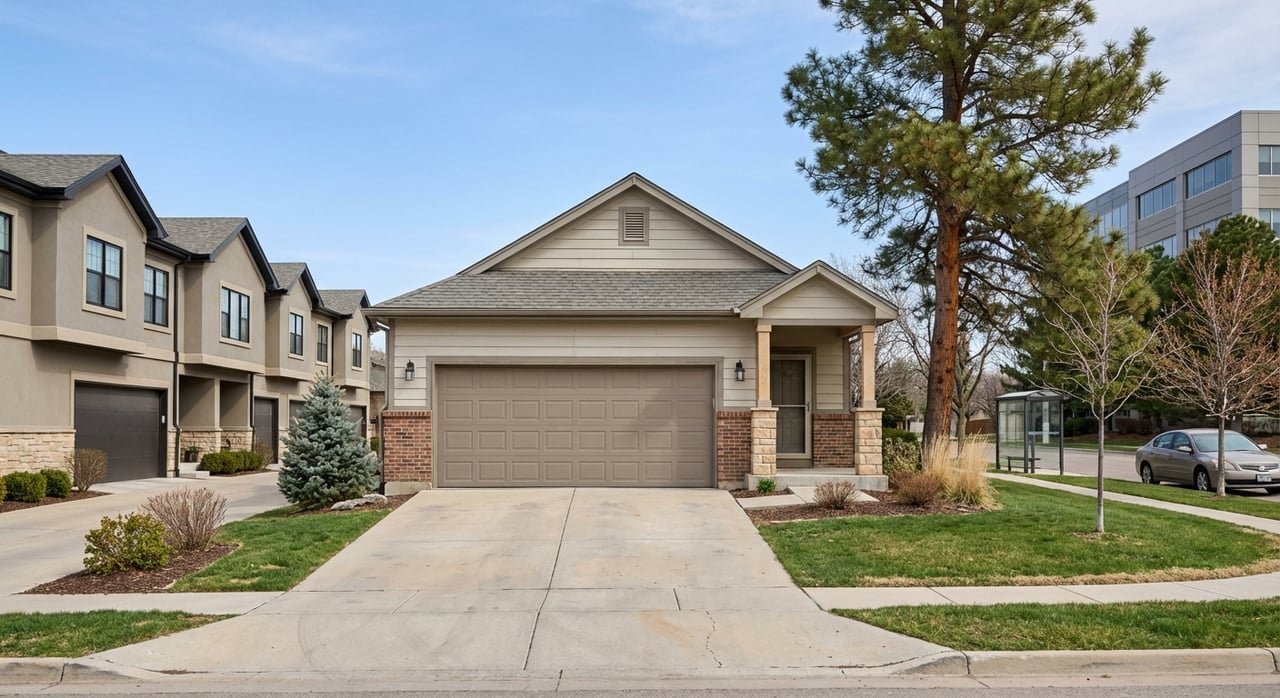
- Greenwood Village. Upscale neighborhoods, some luxury condos, and proximity to DTC employers. Listing and sale medians here trend higher than surrounding markets. If you value a short drive and premium housing, start here.
- Centennial. A popular choice for move-up buyers who want single-family homes or townhomes at generally lower price points than Greenwood Village. Quick access to Arapahoe Road and Dry Creek makes commuting straightforward.
- Lone Tree. Newer master-planned communities and townhomes near Park Meadows retail and County Line station. It often balances commute time with newer housing stock.
- Englewood and southern Denver pockets. Value-focused condos, townhomes, and rentals with light-rail access via Orchard, Arapahoe at Village Center, Dry Creek, and County Line.
- Cherry Hills Village and similar premium enclaves. Large-lot homes and specialty markets within a short drive, though not typically transit focused.
School district boundaries and city lines can change within a few blocks. If schools are part of your decision, verify assignments for a specific address with the district.
Budget stretch: Parker and points south
If you want more space and a lower price per square foot, Parker and parts of Douglas County can be a fit. Commutes typically run 20 to 40-plus minutes depending on traffic and route. Many residents use time-shifted schedules or toll roads to manage peak-hour congestion. For an overview of regional driving patterns and route choices, this local guide to getting around the area is helpful for planning (DenverSam’s “Getting There” overview).
Quick fit checklist
Use this simple filter to narrow your search:
- I want to walk to work or rail. Focus on DTC-core apartments and condos near Belleview or Arapahoe at Village Center.
- I want a short drive in a single-family home. Start with Greenwood Village, Centennial, and Lone Tree.
- I want more space and value. Explore Parker and Douglas County suburbs and test-drive your route at peak times.
- I want flexibility to change commute modes. Target homes within a 10-minute drive of an RTD station and confirm station parking.
Commute basics you should know
Driving: I-25 and key arterials
The DTC sits on I-25 with east-west access from Arapahoe Road, Orchard Road, Dry Creek Road, and Parker Road. Peak slowdowns typically occur on weekday mornings from about 7:00 to 9:00 and evenings from about 4:00 to 7:00. Some drivers use I-25 express lanes or E-470 toll routes. If you are deciding between two neighborhoods, test your route at your actual start and end times to see the real pattern.
Light rail: Southeast corridor coverage
RTD light rail serves the DTC with stations at Belleview, Orchard, Arapahoe at Village Center, Dry Creek, and County Line. Many commuters ride rail to downtown and transfer at Union Station for other lines. Trains run more frequently at peak times, and travel times to downtown can be competitive since rail avoids highway backups. Check current routes and schedules on the RTD website.
FlexRide and employer shuttles
RTD’s DTC FlexRide zone provides microtransit coverage for the last mile around employment centers. Many employers also offer shuttles, vanpools, or transit subsidies, so ask your HR team about benefits. Learn about the service area on the RTD DTC FlexRide page.
Park-and-ride and station parking
Several DTC corridor stations offer park-and-ride options. Availability can change during peak periods, so check station parking details before you rely on it. Many office campuses in the DTC also provide on-site parking. Ask your employer to confirm parking policies and whether transit subsidies are offered.
Biking and micromobility
You will find multi-use paths and recreational trails in and around the DTC, with Cherry Creek State Park nearby. Because the area is suburban in scale, biking and scooters work best for short last-mile connections or recreation. If biking is part of your plan, pick housing with a safe, direct route to your station or office.
Remote relocation made simple
Virtual touring must-haves
If you cannot visit in person, request a full digital package: measurement-grade 3D tours, a floor plan, a full photo set, property video, and a live agent walk-through for on-camera Q&A. Ask to test windows, open closets, and check ambient noise during the video call. For a primer on what to expect from 3D tours, review this guide on how virtual tours are used in real estate.
Timing your move
Peak moving season runs May through August. Movers book up, prices rise, and popular rentals turn fast. If you are moving in peak months, reserve movers and housing tours 4 to 8 weeks ahead and keep a short-term landing option in your back pocket. For budget and scheduling tips, see this overview on moving during peak season.
Remote closing and paperwork in Colorado
Colorado supports Remote Online Notarization for many real estate documents, and most title companies accommodate e-signing and mobile notaries. Always confirm with your lender and title team which documents must be signed in person. For a legal summary of e-sign and RON updates, see this JDSupra overview and a practical Colorado notary requirements guide.
How a local team coordinates from a distance
A strong relocation partner can take care of the details so you can focus on work. Here is what to request:
- Curated shortlists with floor plans and 3D tours
- Live, recorded video walk-throughs and neighborhood drive-bys
- Offer strategy and contract negotiation
- E-sign coordination with title and lender, plus RON or mobile notary when allowed
- Move-in logistics: key exchange, cleaners, locksmith, and utility turn-on
- Short-term furnished options if you need to land first, then buy
Putting it all together
If you want a five- to ten-minute commute, focus on Greenwood Village or DTC-core condos and apartments. If you want more space, Centennial and Lone Tree offer a balance of commute and value. If you are stretching your budget, Parker can be a smart play as long as you test peak-hour routes and consider transit or time-shifted schedules. Build in extra lead time during summer, and lean on virtual tours and remote closing tools to keep the process smooth.
When you are ready to compare homes and commute options side by side, reach out to Chris Davis for a local plan tailored to your job location, timing, and budget.
FAQs
What is the Denver Tech Center and where is it?
- The DTC is a major employment hub along I-25 south of Denver, centered in Greenwood Village and Arapahoe County, with office campuses and multiple RTD rail stations nearby. See the DTC overview for context.
Which neighborhoods keep the commute under 20 minutes?
- Target Greenwood Village and immediate DTC nodes for the shortest commutes, with Centennial and Lone Tree also close; always test routes during your actual peak hours.
Can I take light rail from the DTC to downtown or the airport?
- Yes; DTC corridor stations connect to downtown, and you typically transfer at Union Station for airport service; confirm schedules on the RTD site.
How much should I budget for a DTC-area rental?
- DTC one-bedrooms often list from the low-to-mid $1,500s to $2,200-plus, with recent medians around $1,800; confirm current pricing with live listings before you decide.
What is peak traffic like near I-25 and Arapahoe?
- Weekday rush hours, roughly 7:00–9:00 a.m. and 4:00–7:00 p.m., are slowest; some commuters use I-25 express lanes or adjust hours to avoid congestion.
Is there parking at DTC light-rail stations?
- Several stations offer park-and-ride facilities, but availability varies; check RTD’s station pages before you plan a daily parking routine.
What should I request for a remote home tour?
- Ask for a measurement-grade 3D tour, a floor plan, a full photo set, and a live video walk-through that covers noise, sun exposure, and storage.
How far in advance should I book movers?
- In peak season, book 4 to 8 weeks early; off-peak, 2 to 4 weeks usually works; expect higher prices and tighter schedules in summer.
How do I verify schools and property taxes for a specific address?
- Boundaries and rates can change within blocks; confirm school assignments with the district and verify taxes with the county for the exact property address.