
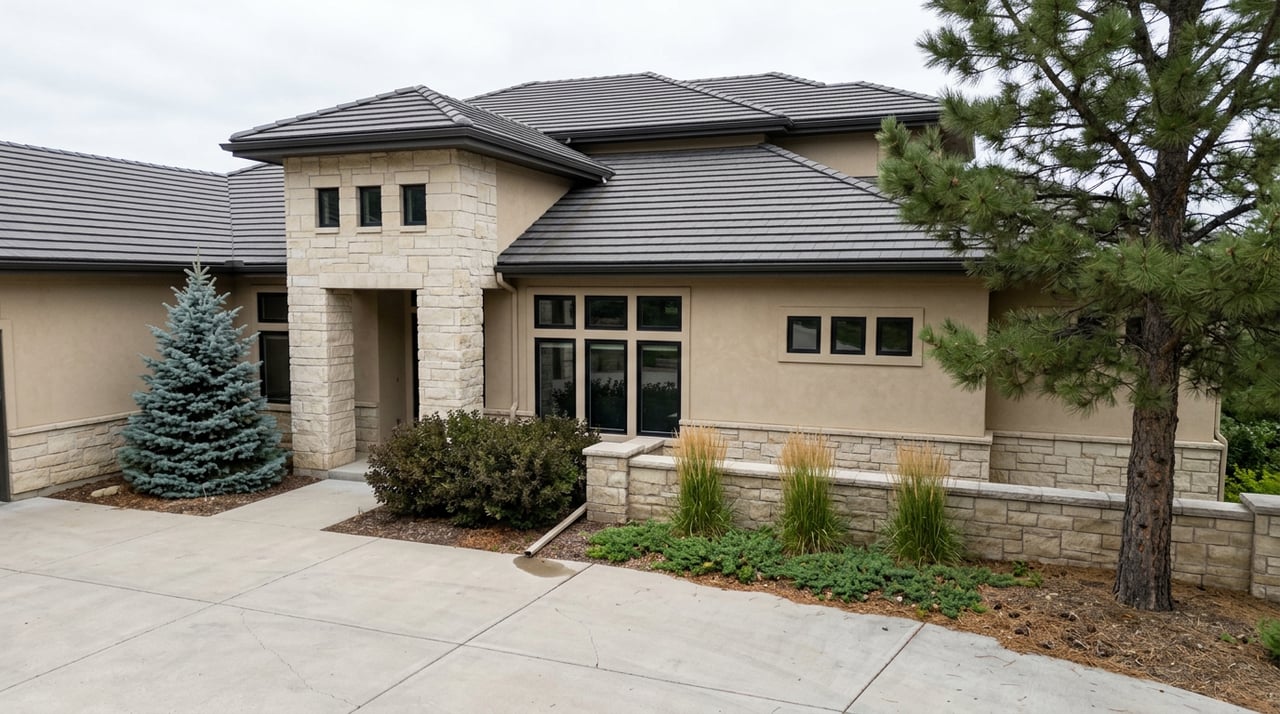
Two listings, same block of RidgeGate Parkway, same list price down to the thousand. One sits in a metro district that's been assessing residents for a decade. The other sits in a metro district that spent 2025 dormant and only reactivated that October, which means its mill levy hadn't shown up on a single tax bill yet when the sign went in the yard. A buyer comparing those two homes on price alone is comparing two different tax realities and calling them the same number.
That's the thing about Lone Tree right now. The city is genuinely one of the more attractive tax environments in the Denver metro for sales tax, and it says so plainly on its own economic development page. But sales tax and property tax are different buckets, and the property tax bucket in large parts of Lone Tree runs through an entity most buyers have never had to think about before: the metropolitan district.
What A Metro District Actually Is
A metro district isn't an HOA with a different name. The City of Lone Tree draws the line clearly on its own site: an HOA is a private organization funded by membership dues that enforces community rules and maintains shared spaces. A metro district is a quasi-municipal government, created under Colorado's Special District Act, funded through an additional mill levy on your property tax bill, and used to pay down bonds that financed the roads, sewer lines, and drainage that had to exist before the first house in a new subdivision could be built.
The city is explicit that it never touches that revenue. Lone Tree collects none of it and takes on none of the district's obligations. The district has its own elected board, its own service plan, its own debt schedule. Colorado now has roughly 2,400 of these statewide, so the tool itself isn't unusual. What's unusual is how much of Lone Tree's current growth is running through them at once.
Why This Line Runs Through Lone Tree Right Now
RidgeGate turned 25 this year, and the west side of that 3,500-acre development is close to finished. Charles Schwab, Cochlear, Kiewit, and HCA HealthONE Sky Ridge anchor a West Village that ColoradoBiz reported in June 2026 had grown to more than 7,500 residents and roughly 10,000 jobs. That side of the community has had years to mature. Its infrastructure bonds have had years to get serviced by a larger, more established tax base.
The east side is a different story, and it's a story that's only really started moving in the past year. Axios Douglas County reported in May 2026 that construction is finally accelerating east of I-25 after decades of infrastructure work, with a 123,000-square-foot King Soopers Marketplace, a new city Justice Center, and the 80-acre High Note Regional Park all now active. Shea Homes is building out the 1,900-home Lyric at RidgeGate village, the first large-scale residential project on that side of the interstate, and an elementary school is scheduled to open there for the 2027-28 school year. Lone Tree's own economic development director, Jeff Holwell, told Axios that after years of missing roads and utilities, "the ingredients needed for it to start are in place."
That's good news for anyone who wants more housing and retail near RidgeGate's five light rail stations. It also means new metro districts are forming, and existing ones are ramping up assessments, right as this side of town fills in.
| West Village (established) | East Village / RidgeGate east side (building now) | |
|---|---|---|
| Approximate residents | 7,500+ (ColoradoBiz, June 2026) | Early stage, growing with Lyric and Village Center projects |
| Major anchors | Charles Schwab, Cochlear, Kiewit, HCA HealthONE Sky Ridge | King Soopers-anchored Lone Tree Village, new Justice Center, High Note Regional Park |
| Metro district maturity | Bonds have had years to be serviced by a larger tax base | Districts newly active or just reactivating, smaller current tax base |
| Land status | Nearly fully sold to end users | Active construction, new districts still forming |
The Rampart Range Example
You don't have to take the general mechanism on faith. Douglas County's public transparency filings show it in a single named district. Rampart Range Metropolitan District No. 9, sitting at the intersection of Peoria and RidgeGate Parkway in Lone Tree, filed a December 2025 transparency notice showing it collected zero dollars in ad valorem tax revenue during 2025. The reason: the district had been inactive and only returned to active status on October 23, 2025. Its mill levy for 2025 gets collected in 2026, meaning anyone who closed on a home in that district earlier in 2025 wouldn't have seen that assessment on a prior year's statement at all.
That's the trap in relying on a home's most recent tax bill as a preview of what you'll owe. A district can sit dormant, then flip active, and the number that shows up on next year's bill can look nothing like this year's. The only way to know where a specific district stands is to check its current status, not last year's number.
The Paperwork You Have To Ask For Separately
Colorado law requires it to be disclosed. Under C.R.S. 38-35.7-101, every purchase and sale agreement has to carry a bold, all-caps notice telling the buyer the property may sit inside a special taxing district subject to property tax, and pointing them toward more information. That disclosure is the floor, not the full picture.
The practical issue is that a metro district certificate is a different document from an HOA packet, produced by a different entity, and it doesn't automatically arrive bundled with the rest of your closing paperwork. Since Lone Tree's own materials draw such a hard line between what an HOA does and what a metro district does, treat them as two separate requests from day one of due diligence rather than assuming your title company will surface both without being asked. If a listing sits anywhere near RidgeGate's newer villages, ask specifically which metro district the parcel falls in, what its current mill levy is, and whether that district is fully active or still ramping up.
None of this means new construction in RidgeGate is a bad buy. The homebuilders' own framing of the mechanism is worth taking seriously: without a metro district spreading infrastructure costs over decades of tax collection, that same cost gets baked into the up-front price of the house instead, which prices out more buyers at the point of sale. It's a trade of when you pay, not just whether you pay.
The Marketing Line vs The Tax Bill
Lone Tree's own site is right to advertise its sales tax advantage. It genuinely has one of the lower combined sales tax rates in the metro area, and that matters if you shop and dine locally. But that's a rate on purchases, not on property. A homeowner in a newly active RidgeGate metro district is paying a mill levy layered on top of standard Douglas County property tax, a number that has nothing to do with what the city charges at the register. Comparing "Lone Tree taxes" as one figure conflates two different systems that happen to share a zip code.
A Few Questions Worth Asking Before You Write An Offer
Is a metro district the same as an HOA? No. An HOA is a private group funded by dues that enforces community rules. A metro district is a government entity funded by property tax that repays infrastructure bonds. A property can carry one, both, or neither.
Does every home in RidgeGate carry a metro district assessment? Not automatically, and boundaries don't always follow what you'd expect from a map. The only reliable way to know is to check the parcel against the district itself, not against the neighborhood's general reputation.
Can a metro district's tax bill change year to year even if I haven't moved? Yes. As the Rampart Range No. 9 example shows, a district can go from inactive to active, and a mill levy that wasn't collected one year can appear the next.
Where This Leaves You
The median price on a Lone Tree listing tells you what someone was willing to pay. It doesn't tell you which government entities have a claim on that property going forward, or whether the district behind it is a decade into repaying its bonds or a few months into reactivating. If you're comparing homes across RidgeGate's west and east sides, or against neighborhoods outside Lone Tree entirely, that distinction changes the real math more than the sticker price does.
Team DTC Davis works this corridor closely enough to know which districts are active, which are ramping up, and what that means for your specific offer. If you're weighing a Lone Tree purchase against another south Denver suburb, request a complimentary home valuation and we'll walk the real numbers with you before you write anything down.